Latest News

Dog Lovers Book Club - December 2021


Santa is coming and though it's hard to feel upbeat in Australia these days, we'll try to get into the festive spirit with the Christmas 2021 selection of our Dog Lovers Book Club!

With a mix of biographies, non-fiction, dog-friendly travel guide and educational children's books, this is the chance to tune off and forget about our increasingly dystopian society...


A DOG’S WORLD
Imagining the Lives of Dogs in a World without Humans

by Jessica Pierce, Marc Bekoff

From two of the world's leading authorities on dogs, an imaginative journey into a future of dogs without people.


What would happen to dogs if humans simply disappeared? Would dogs be able to survive on their own without us? 

A Dog's World imagines a post-human future for dogs, revealing how dogs would survive—and possibly even thrive — and explaining how this new and revolutionary perspective can guide how we interact with dogs now.

Drawing on biology, ecology, and the latest findings on the lives and behaviour of dogs and their wild relatives, Jessica Pierce and Marc Bekoff — two of today's most innovative thinkers about dogs — explore who dogs might become without direct human intervention into breeding, arranged playdates at the dog park, regular feedings, and veterinary care. 

Pierce and Bekoff show how dogs are quick learners who are highly adaptable and opportunistic, and offer compelling evidence that dogs already do survive on their own — and could do so in a world without us.

Challenging the notion that dogs would be helpless without their human counterparts, A Dog's World enables us to understand these independent and remarkably intelligent animals on their own terms.


Hardcover, 240 pages
Publisher: Princeton University Press, 26th October 2021


RRP: $39.99 at www.booktopia.com.au

MY HERO THEO
The Brave Police Dog Who Went Beyond the Call of Duty to Save Lives

by Gareth Greaves

‘I’d been in so many scrapes with Theo and he’d always saved me. Those days were the hardest of my life so far and … at the darkest point, those big brown eyes and that torn ear where I needed them to be. Right there next to me.’
PC Gareth Greaves first met Theo, a German Shepherd, when he was a nervous 14-month-old puppy. They were instantly inseparable and police dog Theo became the best partner Gareth’s ever had.


During six-and-a-half years of active service, police dog Theo located, tracked and detained suspects leading to more than 200 arrests. In that time, he endured broken ribs and being bitten by assailants as well as being set on fire. From tackling and detaining an arsonist, to protecting Gareth from a gang of men with machetes in an armed robbery, Theo’s bravery knew no bounds. Time and time again he put his own life at risk (often coming close to death) to save others.

Even while off duty Theo has been a rock to his partner, providing emotional support as Gareth learned that some of the hardest battles aren’t always on the front line.

My Hero Theo is the heartwarming story of one man and his heroic dog – and the bond that sees them go above and beyond the call of duty to keep each other safe.


Paperback, 320 pages
Publisher: HarperCollins Publishers, 5th November 2021


RRP: $24.99 from www.booktopia.com.au

TO CRACK THE WORLD OPEN
Solitude, Alaska, and a Dog Named Woody

by Ward Serrill


From a remote cabin in the rugged rainforest of the Alaskan wilderness, where the untamed landscape tumbles into the ocean, a remarkable yellow Labrador retriever named Woody helped an exile from corporate America seek a fierce freedom.


A young Ward Serrill arrived in Southeast Alaska in 1982, dispatched by his Seattle accounting firm to a remote native village to audit their new corporation. Within a year Serrill had ditched the job, with designs on forging another life up north, a new Labrador retriever puppy in tow. Woody--named after Guthrie--was of champion bloodline and seemed ready for any adventure.

After a stint working with Tlingit elders in the village of Saxman, Serrill was adopted into the clan. Some called him Dleit Yeil, or White Raven. But over time, his connection to the village began to fray as his relationships there unearthed dark aspects of his own family history. Only his friendship with Woody remained unshakable, and it was time to move on.

On the maiden voyage of their dogyak - a specially fitted kayak - Woody and Serrill rounded a point into a half-moon bay with rugged coastline. There, sixteen miles from town on the rough, steep bank, accessible only by boat, sat a small gray house on stilts. In the shadow of ancient spruce and cedars, with a waterfall on one side and the ocean below, he and Woody took up their years-long vigil in the place he came to call Shakri-La.


His experiment in self-isolation helped Serrill to confront the reality and the emotional cost of running away - physically and emotionally - all his life. Looking inward and facing his darkness, Serrill discovered an unexplored region of his heart that offered the true possibility of healing and belonging, made possible by the steadfast devotion of a very special dog.

An extraordinary journey of the heart and soul from the award-winning filmmaker and director of The Heart of the Game, To Crack the World Open is a poignant, adventure-driven Alaskan story of self-discovery, with one of life's most essential relationships - a man and his dog - at its heart.


Paperback, 288 pages
Publisher: Girl Friday, 2nd November 2021

RRP: $29.75 from www.booktopia.com.au

THE BONE RANGER
by Louisa Bennet

Meet Monty, the food-obsessed, naughty, and totally loving Golden Retriever who will do anything for his owner, Detective Constable Rose Sidebottom. 

Of course, as these things go, Monty is no ordinary dog and Rose is no ordinary hooman. He has a super-smart nose and a network of unique informers via wee-mail; while Rose has an uncanny ability to know when people are lying. 

Together they make a formidable team. But Rose is battling anxiety and her boss has put her on sick leave, so there's nothing much going on - until a stranger begs for their help to find a missing person. The case soon becomes a murder investigation, and Rose's boss warns her not to interfere. 

But when dogs also start disappearing, Monty and Rose have no choice and set out to solve it. Louisa Bennet also writes crime thrillers, like Prey, as L.A. Larkin.

Hardback / Paperback, 360 pages
Publisher: Clan Destine Press18th November 2021

Win 1 of 5 (paperback) copies of The Bone Ranger in this week's competition (closing 09/12/21).

RRP: $32.95 (paperback); $39.95 (hardback) from all good bookstores and online.

THE NOMAD'S GUIDE TO TAKING YOUR DOG ON THE ROAD IN AUSTRALIA
A complete guide to travelling around Australia with your dog

by Paul Chai


This is a complete guide to travelling around Australia with your dog and what you need to know before you go.

Travelling with a dog means that everywhere you stop you are not only thinking of where to eat and what to see but trying to understand where you can take your dog too. Dog-friendly attractions, dog parks, dog beaches, dog friendly cafes and bars.


This book helps you navigate your trip and be prepared before you go or while on the road.

Filled with tips from previous travellers with a list of places to visit and camping, caravan and hotels that are available for you to take your fur child. Included are the rules and regulations that come with having a pet on the road. Read how to work within these rules so your holiday is just as rewarding with your dog on the road with you.


Paperback, 240 pages
Publisher: New Holland Publishers, 20th November 2021

RRP: $29.99 available from all good book retailers or online from au.newhollandpublishers.com

BOOK CLUB - KIDS CORNER

THE IMPERFECTLY PERFECT PUPPY

The Unbeatable Spirit of Trixie the Bernese Mountain Dog

by Joann Neve, illustrated by Janelle Edstrom

Trixie was the smallest puppy in the litter. She was the smallest Bernese Mountain dog you would ever see. She was curious and loved being with her littermates. As she grew, it became clear that there was something wrong...she was blind! 

Trixie found it hard, but over time, she learned to live her life with a bouncy happiness that would never waiver. Trixie learned to find her brothers and sisters by sound and enjoyed every moment with them and her owner. One day, her sight returned. As Trixie grew, she had difficulties running, jumping, and climbing, but she never lost her spirit.

The Imperfectly Perfect Puppy is a loveable and endearing story about disabilities and overcoming obstacles. It is the perfect book for parents, teachers, and caregivers of kids 3-9 to start discussions on accepting others and facing challenges. This is the second book in the Life Lessons from Dogs children's series of books.


Paperback, 38 pages
Published: 26th November 2021
For Ages: 3 - 9 years old


Price: $30.68 from www.booktopia.com.au

YOUR FOREVER DOG
by Leslie Yerkes, Randy Martin, illustrated by Traci Harmon-Hay
 
Big Boy is a South African Mastiff who lives wild in the back lot of a manufacturing plant in Cleveland, Ohio. He has no one to feed him, provide water, or care for him. He lives with the constant memory of being beaten by the human who used to own him, before that man brought him to this field and left him to survive on his own.


One day, a young girl and her dog show up with roasted chicken, a smile, and hope. Will that be enough to rescue Big Boy? To move him from his dreary home, living forgotten in some forsaken field? And will he choose to walk away from this unhappy existent and be rescued by a human and her dog?

This is a story of relationships filled with mistrust and doubt, friendship and betrayal, and the flowering of love. It's about choosing to overcome the past and step forward into the future. It's a story of how it feels when someone loves you.

Hardcover, 54 pages
Published: 17th November 2021

RRP: $29.90 from www.booktopia.com.au

AN ODD DOG CHRISTMAS
by Rod Biddulph

Come join the Odd Dog on a festive journey to find the perfect present, and perhaps save Christmas along the way… a brand-new, paw-some story from Rob Biddulph

It’s Christmas, and this Odd Dog is running out of time to find the perfect present for her pal…

But when she meets a new friend who needs helps, she realises that gifts might not be the most important thing about Christmas after all.

A gloriously festive illustrated story about the real meaning of Christmas, from the bestselling and award-winning Rob Biddulph, the creative star behind the viral and phenomenal #DrawWithRob and author of the Waterstones Children’s Book Prize-winning Blown Away!

This is the perfect story for children aged 4+, dog lovers everywhere and anyone who loves Christmas.

Hardcover, 32 pages
Publisher: HarperCollins Publishers, 27th October 2021
For Ages: 3+ years old

RRP: $19.99 from www.booktopia.com.au

CAT AND DOG EAT CHRISTMAS
by Jonathan Bentley

It’s Christmas Eve, and Cat and Dog’s fridge is bursting with festive food! With their owners away, and Cat and Dog feeling peckish . . . What could possibly go wrong?


Join these two lovable and incorrigibly mischievous pets as they eat their way through Christmas. They’ll need brains. They’ll need bravery. 
And they’ll definitely need food.

Published: 13th October 2021
Hardcover, 24 pages
For Ages: 3+ years old


RRP: $17.99 at www.booktopia.com.au

Top 9 Beach Dangers for Dogs


It’s summer, and summer in Australia means going to the beach and enjoying the water and sun. More than 85% of Australians live within 50 kilometres of the coast, and we love it. 

Soaking up the sun, building sandcastles, surfing the waves and, in many cases, hanging out with our dogs. But before planning a trip to the beach with your pup it is important to understand what dangers lay ahead.

Dr Lachlan Campbell is the Head Veterinarian at Your Pet PA and lives near the beach on the Sunshine Coast. He shared his insights on the top dangers when taking your dog to the beach...

#1. Heatstroke

Hot sun, hot sand, little shade, a fur coat, and an excited dog is a recipe for heat stroke. Dogs don’t sweat – at least not for the purpose of cooling down like we humans do – and can overheat very quickly. Nor can they tell us when they’re hot. Heat stroke can be serious and if not treated quickly and intensively which can lead to organ failure and may be life threatening.

To help your pup avoid heat stroke don’t visit the beach during the hottest part of the day. Make sure you provide them with enough shade, plenty of cool drinking water and limit excessive exercise.

If your dog is showing any of the following symptoms, they may be suffering from heat stroke, and you should seek veterinary attention immediately.
  • Excessive panting
  • Red (rather than pink) gums
  • Diarrhoea
  • Vomiting
  • Lethargy (after or during a day at the beach)

#2. Sunburn

Just like us, dogs can get sunburnt, and the most likely places for them to get burnt is their nose, ears, and belly. Dogs with thin coats or short white fur are also more likely at risk from the suns UV rays.

To prevent your pooch from getting sunburnt apply a good quality sunscreen that is safe for animals (not all sunscreens are suitable for pets, especially those with zinc oxide) to any exposed pink skin and provide them with a shaded area to cool off under. You can also consider UV- and UPF-protective clothing if your pooch will tolerate it. These are becoming very popular for dogs and can be a safe and practical way to protect high-risk dogs when outdoors.


The first and most obvious sign of sunburn on a dog is redness directly on a dog’s skin. Other signs of dog sunburn include:
  • Dry, cracked, or curled edges of a dog’s ears
  • Hair loss
  • Sores/scabbing
  • Skin ulcers
  • Skin infections
  • Skin cancer (eg squamous cell carcinoma, melanoma) which can present itself as abnormal tumours
If your dog displays any of these symptoms and you’re not confident it is sunburn related, seek veterinary attention as there are other more serious diseases which can cause these signs.

Severe sunburn injury on a dog’s nose.

#3. Salt Water

When dogs are hot and thirsty, they can be inclined to drink almost anything, and this includes sea water. 


Drinking a large amount of salt water can cause your pup to become more dehydrated (when a dog ingests excessive amounts of salt, their body will try and correct the imbalance) and this can lead to salt toxicity. This occurs when there is too much sodium in the blood and is also known as hypernatremia.

The common symptoms of hypernatremia include:
  • Excessive urination
  • Extreme thirst
  • Confusion
  • Lethargy
  • Diarrhoea
  • Vomiting
  • Nausea
  • Odd behaviour
  • Muscle spasms
  • Seizures
  • Death (in extreme cases)

To avoid your dog from ingesting too much salt water ensure you take a break away from the ocean after every 15 minutes of play and offer fresh water throughout this time.

#4. Sand ingestion


Believe it or not, eating, and swallowing sand can become easy for dogs to do after a day of digging, rolling around and chewing on sandy, wet toys. This unfortunately can cause stomach problems for your pup if too much sand has been ingested, as the sand can compact in their stomach and cause a blockage.

We recommend taking toys that are suitable for the beach and discouraging your pet from eating or chewing the sand whilst they play.

Common symptoms of sand impaction can include:
  • Vomiting
  • Seeming constipated
  • Abdominal pain
  • Loss of appetite
  • Lethargy
Signs can develop anywhere from just a few hours after exposure to a few days later. If you think your dog may be showing any of these signs, then please seek veterinary attention.

#5. Hot sand

As a rule of thumb, if the sand is too hot for your feet, then it is too hot for dogs’ paws. Hot sand can cause your pets paws to burn and become very painful. 

Consider carrying your dog on the soft sand or purchasing dog booties or socks to put on to protect them. We encourage you to play with them on the wet sand and avoid the hot sand especially during the hottest time of the day.

#6. Fishhooks

We already know that dogs love to sniff out all the wonderful new scents of a new location! 

Unfortunately, due to the strong smell of fish and fish bait, fishhook injuries are not an uncommon beach danger for dogs with fishhooks commonly getting stuck in their mouth, food pipe (oesophagus), stomach or embedded in skin.


If you find that the hook and barb is embedded in an area of the body, immediately cover it to prevent further damage or your pet from chewing, licking, or swallowing it. Even if you were able to successfully remove the hook, we would still recommend taking your dog to the veterinarian as soon as possible.

To prevent this injury from occurring always watch your dog closely when roaming the beach and remove any items that are not his toys from his mouth and discard.

This chocolate Labrador was unfortunately got a bit too close to this fishing lure!


This is an X-ray of a fishing hook (circled) lodged in a dog’s oesophagus. Fishing hooks may require endoscopic or surgical removal if swallowed.

#7. Jellyfish

While exploring the beach you may come across some washed up sea life. Some will of course be non-threating and others a bit more dangerous. Although the fur on most dogs offers a nice layer of protection, they can be exposed to stings on lightly furred areas such as the snout, face, paw pads, and abdomen. 

The stingers on the jellyfish can continue reacting for weeks after the jellyfish itself dies (in other words, can still sting even when dead). As always, you must keep a close eye on your dog to prevent him from rolling in or eating anything that could cause him harm.

If you recognise any of the following symptoms after your dog has had contact with a jellyfish, you should take your pet directly to the veterinary clinic.

  • Difficulty breathing
  • Loss of coordination
  • Muscle spasms
  • Several stings
  • Swollen oral area
  • Swollen tongue
  • Vomiting

#8. Pufferfish

Although Pufferfish toxicity is one of the rarer dangers seen occur from a trip to the beach, this is also one of the more serious ones. 


Pufferfish contain a potent neurotoxin called tetrodotoxin and when eaten affects the nerves in animals (and humans) which can lead to paralysis. 

As your dog may not be seen eating the fish at the time, it is important to be know the signs of toxicity any time your pet has visited the beach.

Dogs will often appear unwell after ingestion and begin constantly licking their lips and panting. Other symptoms may then start to appear.
  • Nausea (drooling)
  • Vomiting
  • Weakness (usually starting in the legs and continuing towards the head)
  • Inability to control
  • Breathing issues
Treatment for this poisoning is possible, but success is more likely in pets receiving prompt and aggressive treatment by their veterinarian.

#9. Dog Fights


One of the less talked about dangers but also one of the most common seen in vet clinics after a trip to the beach is dogs’ fight wounds. This can occur in the blink of an eye and before you know it you have a severely injured dog or dogs and an expensive veterinary bill (always happens on a weekend!).

Being a dog in an exciting new environment can sometimes cause them to become nervous. If your dog is excited enough to go up to another dog that feels threated this can lead to unprovoked attack.

Although your dog is well socialised, friendly, submissive towards other dogs and ‘would never bite’ this cannot guarantee their safety or the safety of other dogs. Having your dog on a lead or playing at an area of the beach that is a bit more quiet and less crowded will help ensure your day at the beach remains a fun and enjoyable day!

If your pet does become ill has injured themselves after a day at the beach, please contact your veterinarian immediately.

written by Dr. Lachlan Campbell, November 2021 for Australian Dog Lover (all rights reserved).

About the Author:

Dr Lachlan Campbell 
BVSc (hons) BScApp (hons) BSc Dip.Mgt MANZCVS (Surgery) is the Head Veterinarian at Your Pet PA and lives near the beach on the Sunshine Coast, Queensland. His three dogs Edna, Euka and Pip all love spending time at the beach with him and his young family. 

Lachlan has over 13 years’ experience and has a keen interest in all aspects of veterinary medicine including ultrasonography, preventative medicine, wellness care and advice. He has worked in small animal general and emergency practices in both Australia and internationally. 

Lachlan has advanced surgical qualifications and has been admitted, through examination, to be a member of the Australian and New Zealand College of Veterinary Scientists.

To learn more, visit the website yourpetpa.com.au or follow Your Pet PA on Facebook at www.facebook.com/yourpetPA/ and on Instagram www.instagram.com/yourpetpa_au/  

What Constitutes a Veterinary Emergency?


With summer upon us and the ease of travel restrictions, many of us will be keen to explore beyond our backyards but at home or away, accidents and illnesses do happen.

If you're not within easy reach of your local vet, what do you do?
Veterinary Nurse Leah Eichner has worked in emergency and critical care for years and she shared her expertise with us.

It's the middle of the night, your heart drops as you look deep into the trusting eyes of your furred friend. You know there is something wrong. The question is... how serious is it? Is this something that can wait until morning? Is it worth waking up the 'on-call' vet or driving to the nearest 24 hour emergency hospital?

This is a situation many dog parents have found themselves. So, how do you decide whether to spend the extra money on emergency vet care or wait until your clinics normal open hours? There are some tell-tale signs to look out for.

#1. Vomiting, Diarrhoea and Lack of Appetite

Gastrointestinal (GI) upset is one of the most common complaints we see in veterinary clinics. These symptoms can be caused by a number of different problems. We always recommend a vet consult for any dog who has GI upset.

These signs alone are not always cause for emergency veterinary attention. If your dog is quite bright and happy despite the GI upset, it may be okay to wait until your vet's normal opening hours to have them seen.

Seek emergency veterinary attention when these symptoms are accompanied by:

✔️ Lethargy / listlessness
✔️ Restlessness or obvious discomfort
✔️ A significant amount of blood in the vomit or faeces
✔️ Known toxin or foreign body ingestion (the dog has eaten something it shouldn't have)

#2. Seizure

Seeing your pet seizure can be a frightening experience, especially for pet parents who are seeing it for the first time. Seizure always needs to be reported to your vet but how do you know when a seizure is an emergency?


If the seizure was a short episode that your pet was fast to recover from, try to stay calm. Watch your pet, without bothering them too much. Keep them in a safe area, where they can rest if they want to. If they settle, it may be okay to wait until normal open hours to have them seen to.

You should seek emergency veterinary attention when:

✔️  The seizure does not stop after a couple of minutes

✔️  The seizure stopped half an hour ago but your dog is continuing to show neurological signs (e.g. off balance or unable to stand/walk, head tilt, blindness, disorientation, will not settle)

✔️  The seizures continue to happen. There is a 'cluster' of seizures, meaning more than one happening within a short amount of time. Even if your dog is a known epileptic, cluster seizures are cause for emergency care.

✔️ When there has been possible access to a toxin (there are some toxins that cause seizure when ingested, one of the worst for this is snail bait).

#3. Sudden Onset Bloating of the Stomach

Bloating of the abdomen is one symptom you should never ignore. If it is sudden onset bloating, this is always an emergency situation. 

Gastric dilatation and volvulus (GDV, commonly called 'bloat') is a condition seen mainly in large breed, deep chested dogs. With this condition, time is of the essence. The quicker your dog is seen, the better their chance of survival. GDV is a painful condition and can be accompanied by panting, vomiting, lethargy and general discomfort. In some cases, it causes dogs to collapse. If there is any chance your pet has bloat, don't wait. Seek immediate vet care.

GDV is not the only cause of a bloated abdomen in dogs but many other conditions that cause a distended abdomen are also emergency situations. It is best to be safe and get your dog checked straight away if they have this symptom.

#4. Excessive Panting and/or Coughing


Panting can mean many things. Most of us are aware that dogs do this when they are hot. Many dogs will also pant when they are in pain or when they are stressed. Another reason for excessive panting and sometimes coughing is lack of appropriate oxygenation.

Any potential breathing problem is considered an emergency. The best advice for any dog who is excessively panting, coughing and not able to settle is to seek emergency vet care.

#5. Injury

If your pet has suddenly been injured, there can be some question as to whether they need a vet straight away or not. It normally depends on the nature of the injury. If your dog is displaying signs of a sore leg, nail or toe and can be effectively kept calm and rested until your vet is open then it may be okay to wait.

As a general rule, if the dog is likely to be very painful post injury or if the dog is actively bleeding, then emergency veterinary attention should be sought. Even if it is only for a pain relief injection. The simplest and kindest thing we can do for an injured dog is to control their pain.

Emergency vet attention is needed when:

✔️ Trauma has occurred, for example: hit by car, falling from a height, dog fight, etc. In regards to trauma, more often than not, emergency vet care is needed.

✔️ There is a wound that is actively bleeding. Some small wounds may be able to be effectively covered to wait for vet care. Any bleeding that is difficult to control or unable to be controlled needs emergency vet care.

#6. Collapse

There are quite a few calls in the middle of the night at veterinary hospitals that report a dog who has collapsed (suddenly unable to walk or stand). There are many reasons as to why collapse can occur. As a general rule, any dog who has suddenly collapsed should be seen by a vet as soon as possible, so please seek emergency care in this situation.

#7. Snake Bite


If you think your pet has been bitten by a snake, always seek emergency veterinary attention.

#8. Whelping

The majority of dogs will be able to give birth without our assistance. In saying that, caesarean is one of the most common emergency surgeries we do in a vet hospital. So, how do you know if your dog's labour is becoming abnormal?

Seek emergency vet care when:

✔️ You can see the dog pushing and contracting but there are no pups born within 30 to 60 minutes

✔️ It has been 2 to 4 hours between pups and the mother is exhausted or is still pushing and contracting without results

✔️ There is a significant amount of green discharge

✔️ You think a pup is stuck in the birth canal

It helps to have a prenatal x-ray done before your dog is due to give birth. This way you can be given an estimated number of pups to expect. You will need to be more vigilant if you have a dog who is likely to have problems due to their breed or has a history of previous birthing issues.

#9. Toxin or Foreign Body Ingestion


Dogs tend to eat things they shouldn't. If you suspect your dog has eaten any sort of drug, plant, fungus, bone, material, human food, garbage, poison, bait or any other unusual objects, call your vet immediately. If you can, have as much of the following information ready as you can. This will help them to decide whether it's an emergency or not:
  • What did they eat?
  • How much did they potentially have?
  • How long ago did they eat it?

Top Tips for Emergency Situations

  • Applying a bandage at home:
When temporarily covering a wound, make sure your bandage isn't too tight. You can do more damage if you happen to cut off circulation. Ensure your dog does not eat the bandage material as this, in itself, can be a problem.
  • Avoid medicating without vet advice:
All too often we see pet parents trying to help their dog by giving them a medication they had at home. Most human medications are inappropriate for dogs and some can cause harm. Do not give any medication until a vet directs you to do so.
  • Take care with distressed pets:
Any dog that is in pain, has an altered demeanour or has had a neurological episode may not be themselves. Even the gentlest of dogs have the potential to bite in these situations.
  • Lifting large dogs:
A large, collapsed dog is not the easiest thing to move. The best way to carry a dog in this situation is to spread out a large, strong blanket or towel next to them. Roll or slide them onto the blanket then have two to four people lift at each corner of the blanket.
  • Tight finances:
Vet clinics understand that lots of money is not something that everyone has. Please keep in mind that all vets have a 'duty of care'. What this means is that they will provide pain relief and first aid to any animal that needs it, even if the owners cannot pay at the time. 

This does not mean they have to treat your dog for free. It ensures that any sick or injured animal can receive enough care to prevent them from suffering without immediate payment.
  • Sick or injured animal that is not yours:
If you hit an animal with your car or find one that is sick or injured. Please make sure it gets to a vet. You won't be charged, you don't even have to leave your details if you choose not to.

written by Leah Eichner, Veterinary Nurse and Freelance Writer, November 2021 for Australian Dog Lover

About the writer

Leah Eichner is a veterinary nurse with over 15 years of experience. She has worked in general practice, specialist dermatology and in emergency and critical care

She has an interest in Australian wildlife that took her on a field trip to Lady Julia Percy Island to study Australian Fur Seals with Melbourne Zoo.

She married Ben in 2009. In 2016, Ben and Leah's love for camping became their lives when they packed up their camper trailer and Toyota Prado, and their two dogs, Brock and Chev and went on an 11-month adventure up and down the East Coast of Australia. 

Vets Beyond Borders help animals in the Torres Strait


Veterinary services on Thursday Island are limited. 

Vets Beyond Borders (VBB) are collaborating with the Animal Welfare League Queensland (AWLQ) and with local island welfare group Thursday Island Animal Support Group (TIASG) to deliver vitally important veterinary care to the animals on Thursday Island.

Australian veterinary charity, Vets Beyond Borders, have played a key role in providing international animal welfare services to their partner organisations for almost two decades. They also work closely with established and highly regarded Australian welfare groups to address animal welfare needs closer to home.

“We often find pet owners in remote communities have the best interests of their animals at heart, but don’t have ready access to emergency or routine veterinary services” says Dr Sally Colgan, VBB CEO.

“At VBB we strive to address the immediate welfare needs of the animals our vets see, but we also recognise how important it is to implement preventative disease management strategies that will ensure good health is maintained long after we are gone” she said.

In September this year VBB volunteers worked with AWLQ and TIASG to treat over 130 animals in four days.

“It was so encouraging to be welcomed by the community and to feel that our work was really needed and appreciated.” said Dr Colgan.

A new team of veterinary volunteers are gearing up to return to the Torres Strait Islands soon. Our small team helps to provide affordable treatments, including desexing surgeries to the community’s animals in need.

VBB’s work not only improves the lives of animals, but it’s a win for the community too, who want the best for their animals. VBB does not receive any government funding and is completely reliant on donations to deliver veterinary care to where it’s most needed.

“It’s clear that there is a need for our veterinarians and veterinary nurses to help animals in need and thanks to all our amazing and generous supporters and volunteers who allow us to continue to deliver on these great projects” explains Dr Colgan.


To learn more about Vets Beyond Borders, please visit vetsbeyondborders.org


About Vets Beyond Borders

Vets Beyond Borders (VBB) is an Australian-based animal charity, in operation since 2003, working to improve the lives of animals and humans around the world.

Through its VetMatch and VetTrain programs, VBB deploys volunteer veterinarians, and veterinary nurses to our Partner Organisations around the globe. We deliver animal health services, participate in, and manage humane animal population control programs, and engage in educational programs, to empower local communities and improve animal welfare at home and abroad.

In 2020 VBB launched VetMatch-AU - the Australian arm of the flagship VetMatch program. Through partnerships with Australian welfare organisations our veterinary volunteers provide vital assistance to animals and people in disadvantaged and remote communities.

VBB’s AVERT (Australian Veterinary Emergency Response Team) program is a nationwide database of volunteers standing by, ready to help animals when natural disasters strike or in the event of an emergency animal disease outbreak.

For more information about our programs and how you can help, please visit our website www.vetsbeyondborders.org

MEDIA RELEASE, 25th November 2021

Beau's Biscuits Grain-Free Baking Mixes for Dogs


Give your dog the gift they deserve this Christmas with Beau’s Biscuits Barking Good Baking Mixes

Welcoming the new treats on the block for our furry pals - Australian-made and owned dog treat baking mix company, Beau’s Biscuits!

Sure to have your precious pups smiling this Christmas (and every time you just want to spoil them!) with its brand new range of Animal Naturopath approved, human grade, and all natural: Grain Free Baking Mixes, Beau’s Biscuits have been created by Melbourne entrepreneur Sarah Morrissey.

Why should humans enjoy the yumminess of cake and cookie baking? The exciting and brand-new innovation is a good news story out of the pandemic, where Sarah found a niche in the market for human-grade dog treat baking mixes; from this, Beau’s Biscuits was born!

Produced straight from Beau’s Biscuits kitchen and delivered to front doors all over Australia, the barking good baking mixes are convenient and do not compromise on taste or flavour. 

Every pooch will be spoilt for choice with the range including an evergreen selection of pooch-approved treats, such as:

✔️ Bo-Bo Biscuits
✔️ Banjo’s Barkday Cake
✔️ Pumpkin’ Donuts
✔️ Red Velvet Pup Crepes
✔️ ‘dem Bones Grain Free Baking Mix

Stuck on Christmas ideas for your pet this year? Beau’s Biscuits has released a limited edition pack: Merry Grain Free Baking Mixes

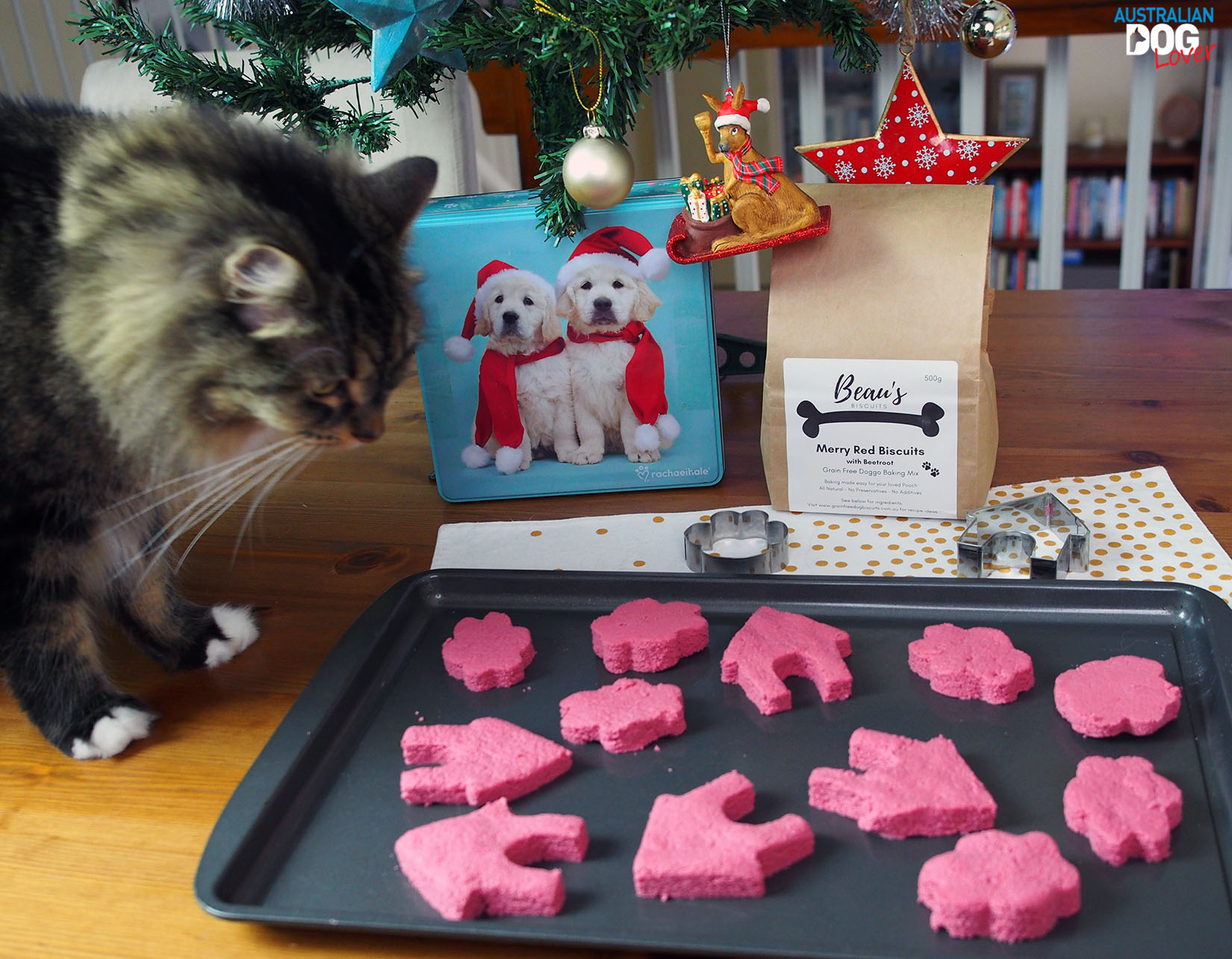
Being the perfect stocking stuffer for all paw-fect friends, this pack contains two different flavours; Merry Red with Beetroot (500g); and Merry Green with Spirulina (500g). Just add water and eggs to create super simple, tasty red and green biscuits.


Not only are Beau’s Biscuits a tasty treat for Aussie pooches, but each sale goes towards making a difference in the lives of others. 
“From every purchase made, a one-dollar donation will be contributed to dog loving charities”, said founder Sarah Morrissey. 
“We have handpicked some pawsome charities so far that consist of Pets of the Homeless, Hear No Evil, Australian Deaf Dog Rescue and Variety Petember.

We are delighted our positive impact extends from our furry friends to the wider world,” she concluded.

Although not intended to replace a dog's balanced diet, the baking mixes’ contents are carefully selected, preservative and additive free, allowing fur babies to indulge in a healthy and yummy treat and fur parents to know their giving their pooch the best!

If seeking to bake up a storm this Christmas, Beau’s Biscuits also offer a range of cookie cutters, to help all creations come to life. 


With fun shapes, such as a doggie bone, paw print, dog house, and even a range of Christmas themed cookie cutters, furry friends will be impressed with these fun baking creations.

Whether pooches prefer cakes or biscuits, Beau’s Biscuits provides affordable, healthy, yummy, and nasties-free treats for all dogs to enjoy, grain-free or not.

Price & Where to Buy:

RRP: from $14.95 (Dog Baking Mix); $4.00 (Cookie Cutter) at www.grainfreedogbiscuits.com.au

You can follow Beau's Biscuits on Facebook at www.facebook.com/DogBakingMixes or on Instagram @beausgrainfreebiscuits

MEDIA RELEASE, 25th November 2021

        Arya: "What are those?" Me: "Beau's Biscuits Merry Red but they're for the dogs!"


         Beau's Biscuits Merry Red Biscuits (after baking) being checked by quality control


Leading Pet Radiation Oncologist joins the team at SASH


The Radiation Oncology team at Sydney’s Small Animal Specialist Hospital (SASH) has been strengthened, with a world leading, board certified specialist joining the team.

Recognised by the American College of Veterinary Radiology, Dr Elias Gumpel will join SASH’s Animal Cancer Centre, bringing with him his years of local and international experience and expertise.

“I am excited to be part of the team at SASH and utilise the state-of-the-art radiotherapy equipment and treatment planning software in the oncology department, which are at the forefront of the industry.”

Dr Gumpel will join a 50-strong team of veterinary specialists at SASH, which is known across the country and around the world for its innovative treatments and services.

The team at SASH’s Animal Cancer Centre help pet owners and referring veterinarians to understand the best course of the action when a diagnosis has been given, with some of their patients even being referred from interstate to receive specialised treatment.

Dr Gumpel says, the Centre provides hope to families, gives new options for treatments, and provides a better quality of life for pets.

“When people get cancer, their GPs always refer them to a specialist oncologist, and that can also be the case for our pets.
“Many pet owners and even general practitioner vets don’t realise how far we’ve come in the treatments that are available to pets if they get a cancer diagnosis.”
With a similar diagnosis rate to humans, roughly one in four dogs will be diagnosed with cancer.

SASH’s Animal Cancer Centre is unique, in that it is able to provide three types of cancer treatment, including medical, surgical and radiation, each able to be used independently or in combination.

(L to R) SASH - Vanessa Leong, Radiation Therapist, Elias Gumpel, Radiation Oncologist,
Rachel Foong, Senior Radiation Therapist


Over the past year, SASH has treated over 80 pets in the Radiation Oncology unit, which has the tools and technology to allow specialists to target and treat specific areas of the body.

“For example – when treating a brain tumour, we often can’t use medical or surgical treatments, so we program the radiation to highly accurately target a very specific area which will spare the surrounding tissue,” says Dr Gumpel.
“With this technology, we’re able to reduce the size of many tumours and their symptoms, which will provide our patients with a good quality of life and increase their lifespan.”
Much like a human hospital, every morning, the Oncology team does rounds of the unit to discuss the best course of action for each patient, with a suitable treatment plan developed by the specialist team.

Pet owners are guided through the process to assess the goal of the treatment, which can include cure as well as palliation – helping pets to be as comfortable and happy for as long as possible.

Tiger the Pomeranian (featured left) was one of Dr Gumpel’s first patients since he started at SASH. He travels to North Ryde all the way from the Central Coast for his brain tumour.

“The field of radiation oncology in animals has been developing since the 1960s and 1970s with a real uptake being seen in the 1990s, so this technology has been utilised and progressing for a while now for animals,” says Dr Gumpel.


“The equipment we use here at SASH is some of the best in the world and matches that available to human hospitals, offering new possibilities for treatment outcomes for our patients.”

The site has recently opened a its new Emergency and Critical Care unit which works in tandem with the Animal Cancer Centre and provides 24/7 human level care to beloved pets.

SASH Emergency and Critical Care is open every day of the year for walk-ins, when urgent veterinary care is needed, or when the local veterinary practice is closed.

To learn more about SASH’s Animal Cancer Centre, visit www.sashvets.com or contact (02) 9199 7250.

MEDIA RELEASE, 24th November 2021